|\/|U$|C🎵🎷
How music impacts emotional experience is one of the most important questions in music psychology. Music has the capacity to provoke strong emotional responses in listeners, such as sensations and excitement.
Musical experiences are dominated by positive feelings. Pleasurable music may cause the release of reward-related neurotransmitters like dopamine. Music is a simple method to change your mood or reduce tension. People utilise music to control, enhance, and minimize negative emotional states in their daily lives (e.g., stress, fatigue). How do listeners experience feelings and pleasure as a result of listening to music?
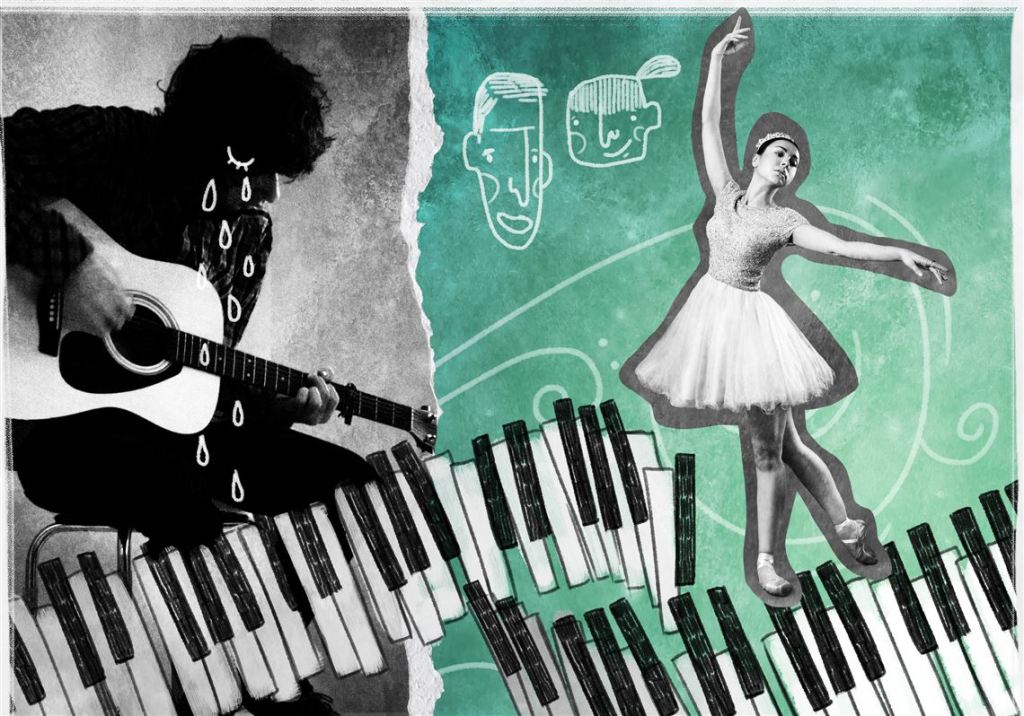




Music may be delightful when it simultaneously satisfies and violates expectations. The musical experience is more startling when happenings in music are unexpected. We like music that is a little less predictable and a little more sophisticated.
There is also an analytical element to music theory. Serotonin systems do not operate independently, and their impact will be heavily influenced by their interactions with other areas of the brain. That is, our ability to enjoy music is the result of our deep human brain and its more recently formed forebrain. People who regularly respond emotionally to attractive musical stimuli have higher white matter connection between their auditory system and regions associated with emotional processing, implying that the two areas communicate more effectively. Music elicits feelings not just on an individual level, but also on an interpersonal and intergroup level. Listeners’ responses to what the music portrays, such as grief from sad music or happiness from cheerful music, are mirrored. Similarly, ambient music influences the sentiments of shoppers and diners.
Memories are a key method for musical experiences to elicit emotions. Musical emotions and musical memory, as recognised by the late neurologist Oliver Sacks, may remain long after other types of memory have vanished. One explanation for music’s long-lasting influence appears to be that listening to it involves various sections of the brain, initiating connections and establishing associations.Song frequently induces strong action inclinations to move in time with the music (e.g., dancing, foot-tapping). To become one with the music, our internal rhythms (e.g., heart rate) accelerate up or calm down. We float and move in time to the music. During uncertain times, people want ‘escapism’ to flee their worries and troubles. Music can help you regulate your emotions. People utilise music to accomplish a variety of purposes, including energising themselves, maintaining attention on a task, and reducing boredom. Sad music, for example, allows the listener to withdraw from the upsetting event (breakup, death, etc.) and instead focus on the beauty of the song. Furthermore, lyrics that are relevant to the listener’s own experience might give voice to sentiments or experiences that one would not be able to verbalise.
Lastly I would conclude that, Music impacts you in a variety of ways, but it primarily influences your brain, which in turn affects the rest of your body. Because it engages so many sections of the brain, music is a fantastic treatment method for the brain. The left and right portions of the brain process pitch, rhythm, metre, and timbre in music. Listening to music stimulates parts of the brain associated with spatial cognition. Music may even change the brain if studied at an early age. Musical instruction in youngsters has been shown in studies to boost the activity of essential neurological systems.

 Aarti Patel